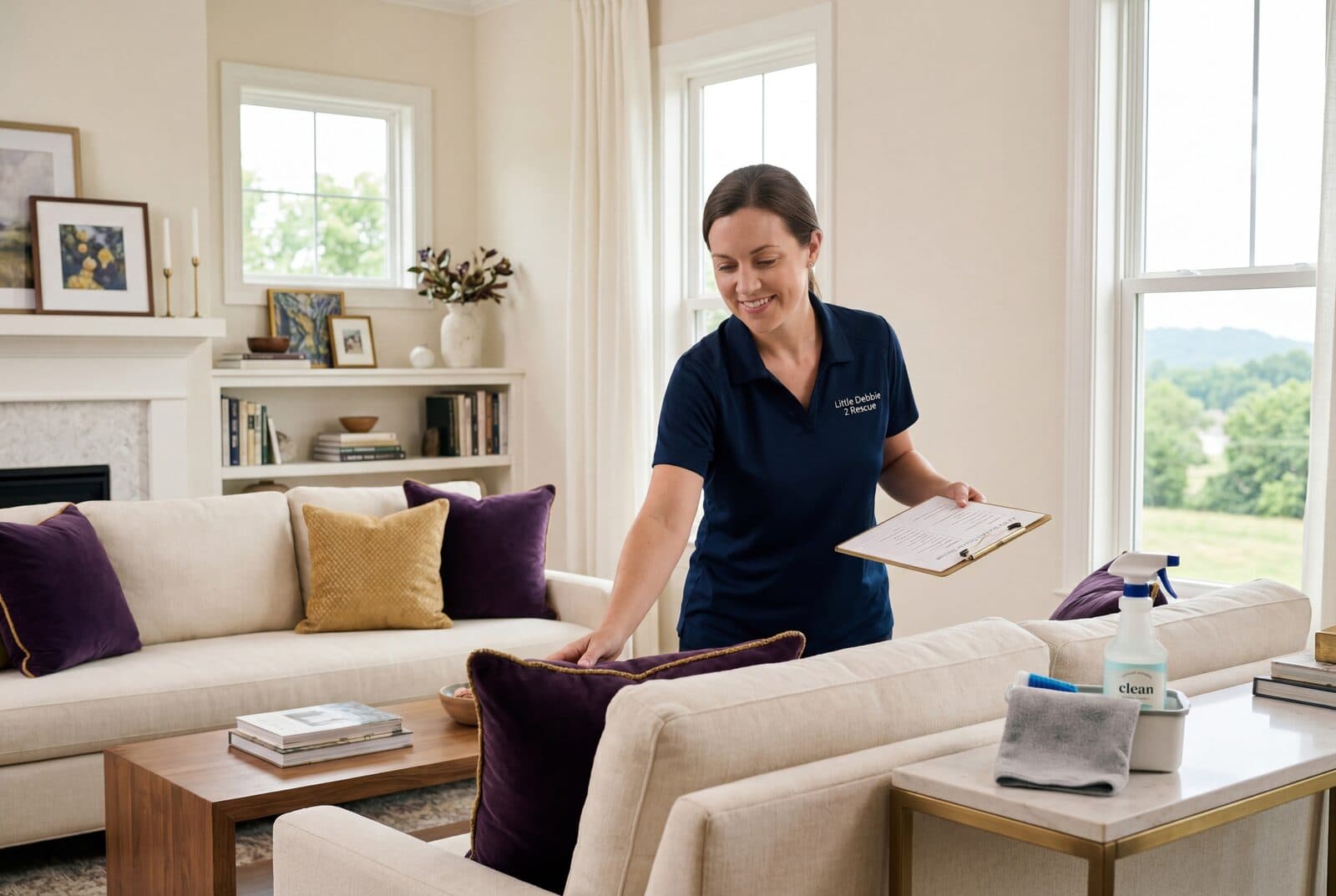
The fifteen minutes that matter
Almost all of the value is in one idea: a cleaner can only clean what they can reach. Every object on a counter is a thing to pick up, clean under, and put back, and doing that a hundred times across a house is where the time goes.
- Clear the kitchen counters. Mail, chargers, small appliances you do not use daily. Anywhere else is fine.
- Clear the bathroom vanities. A tray for the things that live there works permanently and takes ten seconds to move.
- Pick up the floors. Toys, shoes, laundry, bags. Floors are the single biggest time sink when they are covered.
- Clear dining and coffee tables
- Load and run the dishwasher, or at least stack the sink. A sink full of dishes means we clean around it or we do your dishes, and neither is what you are paying for.
- Strip beds if you want linens changed, and leave the fresh set out on the bed
- Empty bins if they are overflowing
Do not pre-clean
People do this constantly and it is the one habit worth breaking. Scrubbing the bathroom before the cleaner arrives is paying twice for the same work.
There is a real distinction here and it is worth holding on to: tidying helps enormously, cleaning helps nobody. Move the objects, leave the dirt. That is the whole rule.
Tell us the things that are awkward to mention
The information that improves a clean most is almost always the stuff people feel odd bringing up. Say it anyway. Every one of these is routine, and finding out mid-visit is worse for everyone.
- A room you would rather we did not go in. Completely normal. Just say which one.
- A surface that has been damaged by the wrong product before: marble, unsealed stone, certain hardwood finishes, a stovetop with a coating
- Anything fragile or valuable you would rather nobody touched
- A cabinet, window or door that sticks, or a handle that comes off in your hand
- Allergies or scent sensitivities in the household, including anyone who reacts to strong cleaning products
- Product preferences: unscented, no bleach, your own supplies, anything
- Where the vacuum, mop or bin bags live, if you want yours used
- An area that genuinely bothers you. If one thing in the house is the thing, say so, and it gets done first while everyone is fresh.
Access, pets and parking
- Confirm how we get in: you are home, a key, a code, a lockbox, a neighbour. Sort this the day before rather than at the door.
- Alarm codes, and what to do if it goes off
- Secure pets, or tell us where they will be. Even the friendly ones: doors get propped open on cleaning day and a nervous cat is quick.
- Tell us about pets even if they will be out of the house, because it changes what we bring
- Parking, especially in Nashville. If it is permit-only, metered or a tight driveway, say so. A crew circling the block for fifteen minutes is fifteen minutes of your job.
- Gate codes, building fobs, elevator access, or a concierge who needs to be told a name
If you will not be home
- Leave the access instructions in writing rather than over the phone
- Leave a note about anything specific you want done: it works better than remembering it later
- Say where you want us to leave the key when we go
- Turn on the lights in rooms with no natural light. It sounds trivial and it genuinely changes the quality of a clean in a windowless bathroom.
- Make sure the water and power are on. Obvious, until it is a vacant property.
After the visit
Walk the house while it is fresh. If something in the agreed scope was missed, say so within 24 hours and we will come back and re-clean that area at no charge. That is what the guarantee is, and it is a re-clean rather than a refund.
The feedback that helps most is specific and unembarrassed. "The shower door track" is useful. "It was fine" is not, and it usually means something was not.